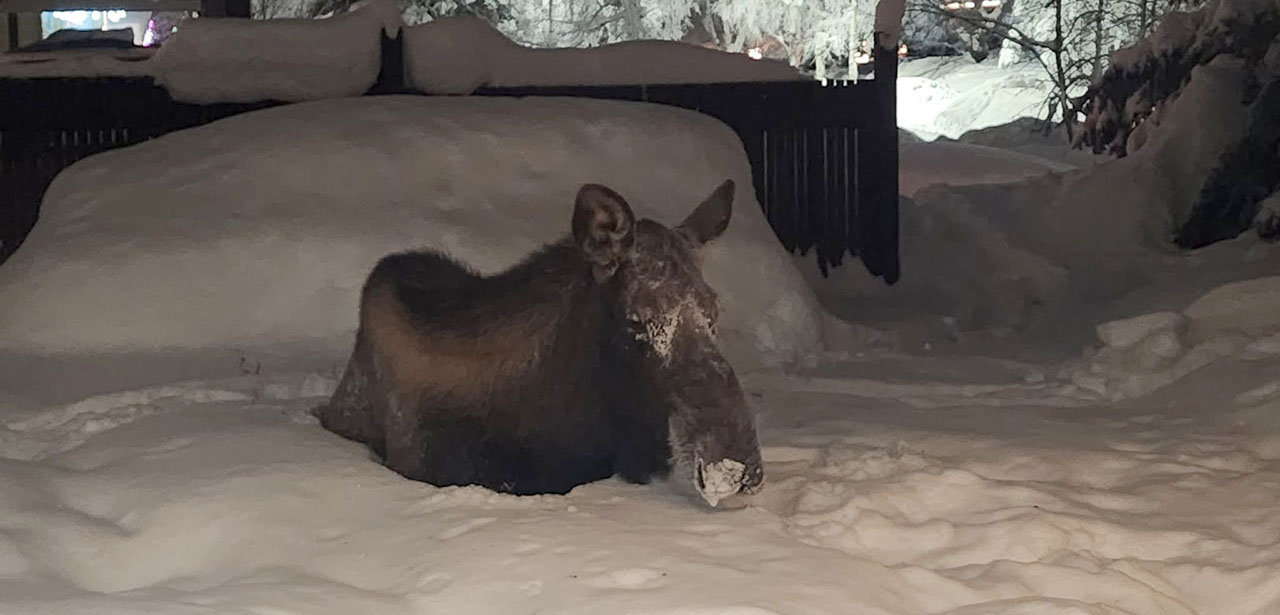
(A moose waiting for me outside of my front door)
We make assumptions in design. We recycle and reuse. I try to make it a habit of challenging things instead of just repeating them. Any idea is a product of the process that led to it, and without validating that process, it’s hard to apply it properly to a new situation.
Moose. We try to exclude moose for safety, and because they munch on our landscapes.
Gates. Gates are great, but moving parts need maintenance… and snow can block them.
School. Moose with children is one of those safety situations we think about. (our children, not theirs)
Accessibility. Whether strollers, wheelchairs, knee scooters, or crutches, we try to make sure pathways leave enough room for people to navigate safely and comfortably.
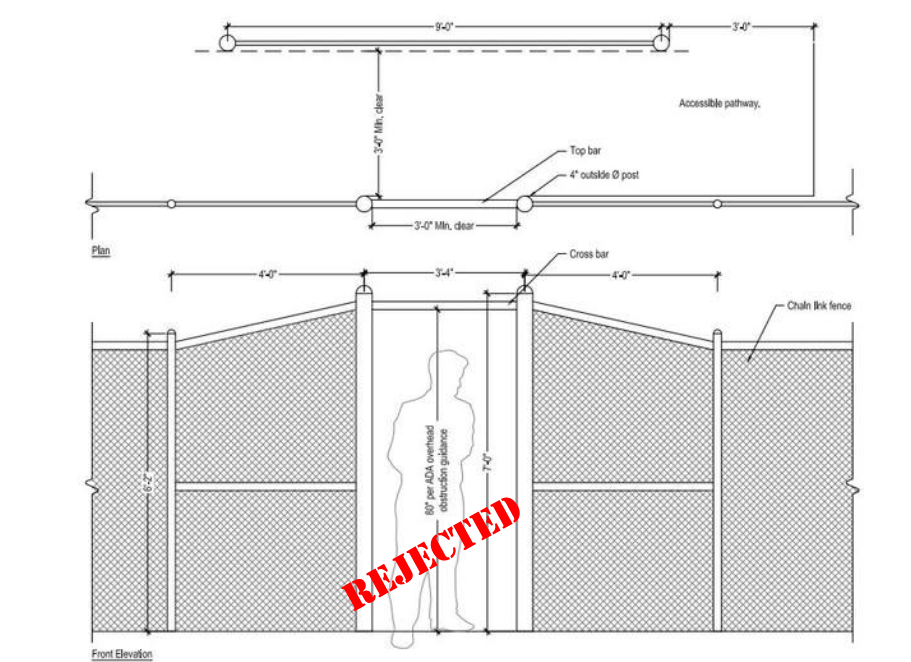
So, how do you provide accessible entry to a schoolground that excludes moose without relying on a gate? The Moose Chicane.
Chicane (def’n) a series of tight turns in opposite directions in an otherwise straight stretch
Moose (def’n) a ruminant mammal (Alces alces) with humped shoulders, long legs, and broadly palmated antlers that is the largest existing member of the deer family
Moose Chicane: How do I restrict this pathway to make it much less accessible to moose while not impacting accessibility for humans?
Criteria: chest width (widest fleshy bits), rack width (widest bony bits), shoulder height, rack height. Then, what is the compressible width of the fleshy bits? If they raise their head up, what is the maximum non-jumping bottom rack height? Then if we have compacted snow, it all gets thrown out, as the fence is then effectively shorter. This is all a great example of the design process.
AND… the moose chicane dies an analytical death when you check in with a biologist who tells you that female moose (no rack/antlers) are bendy and could make their way through a chicane sized to allow a wheelchair through.
So…a good design exercise, but without a viable outcome.